Launching a professional website is one of the smartest investments a small business can make. Whether you’re a local business owner, freelancer, startup founder, or online retailer, your website is often the first impression customers have of your brand.
The challenge is deciding which website builder is right for your business.
Three names dominate the market: WordPress, Wix, and Shopify. Each platform has its strengths, but choosing the wrong one can limit your growth, increase costs, or make it harder to rank on Google.
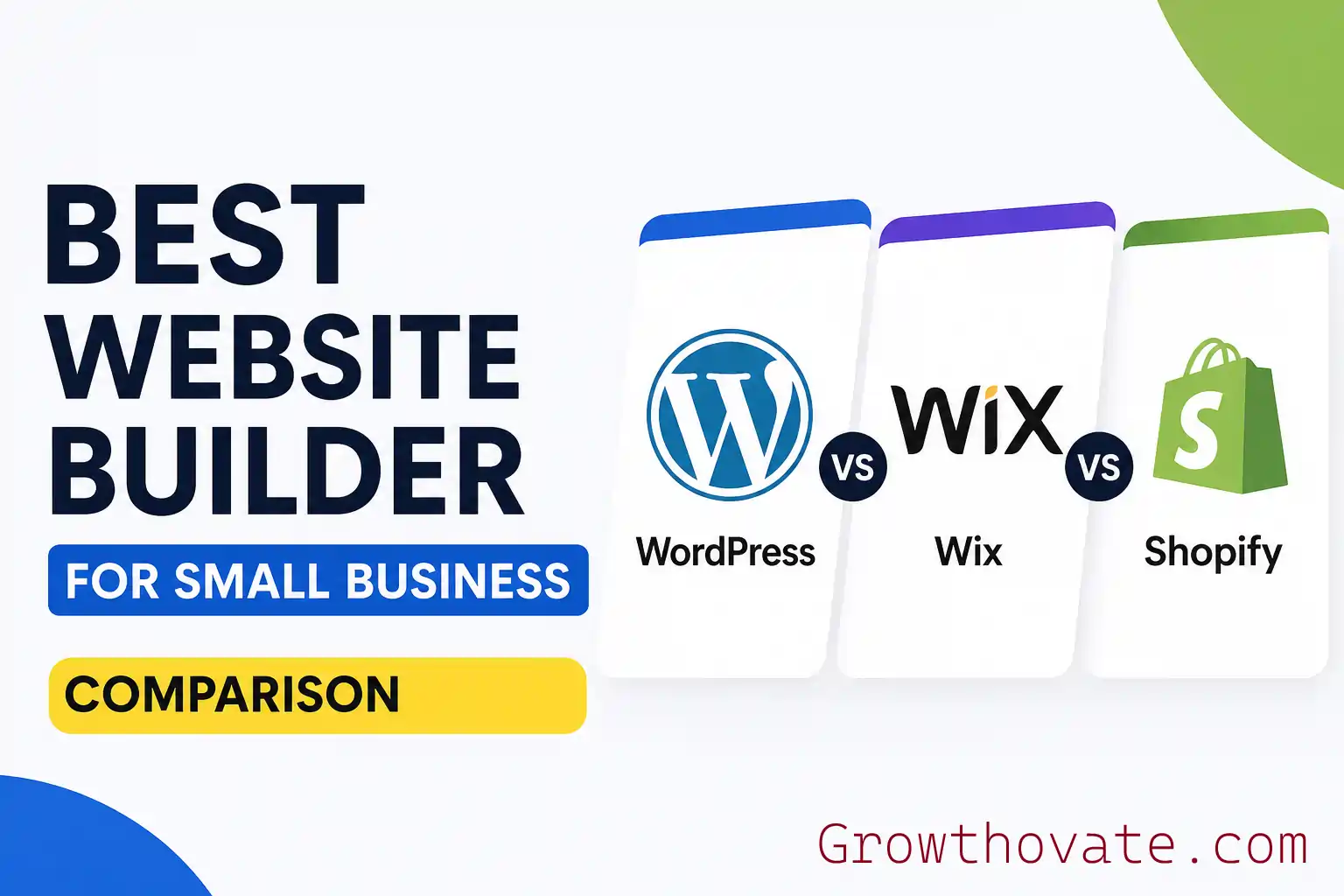
In this guide, we’ll compare WordPress, Wix, and Shopify based on the factors that matter most to small business owners, including pricing, ease of use, SEO, customization, performance, and long-term scalability. By the end, you’ll know which platform best fits your business goals.
Comparison
| Feature | WordPress | Wix | Shopify |
|---|---|---|---|
| Best For | Business websites, blogs, portfolios, eCommerce | Beginners & small websites | Online stores |
| Ease of Use | ⭐⭐⭐⭐☆ | ⭐⭐⭐⭐⭐ | ⭐⭐⭐⭐☆ |
| SEO | ⭐⭐⭐⭐⭐ | ⭐⭐⭐☆ | ⭐⭐⭐⭐☆ |
| Customization | ⭐⭐⭐⭐⭐ | ⭐⭐⭐☆ | ⭐⭐⭐⭐☆ |
| eCommerce | ⭐⭐⭐⭐⭐ | ⭐⭐⭐ | ⭐⭐⭐⭐⭐ |
| Scalability | Excellent | Limited | Excellent |
| Ownership | Full | Limited | Limited |
| Monthly Cost | Low | Medium | Higher |
Winner Overall: WordPress
Why Choosing the Right Website Builder Matters
A website builder isn’t just a tool for creating pages—it affects your business growth for years to come.
The right platform can help you:
- Rank higher on Google
- Generate more leads and sales
- Improve website speed
- Build trust with customers
- Scale your business without switching platforms later
Many business owners focus only on design, but factors like SEO, performance, and flexibility have a much bigger impact on long-term success.
What is WordPress?
WordPress is the world’s most popular content management system (CMS), powering over 40% of all websites on the internet. Unlike closed website builders, WordPress is open-source, giving you complete control over your website.
With thousands of themes and plugins, you can build almost any type of website—from blogs and portfolios to corporate websites, booking systems, membership sites, and large online stores.
When combined with Elementor, WordPress becomes an intuitive drag-and-drop website builder, making it easy to create professional designs without writing code.
Pros of WordPress
- Full ownership of your website
- Excellent SEO capabilities
- Thousands of plugins and themes
- Unlimited customization
- Works for any business type
- Affordable hosting options
- Easy integration with marketing tools
- Scales as your business grows
Cons
- Requires web hosting
- Slight learning curve for beginners
- Needs regular updates and maintenance
For businesses planning long-term growth, WordPress offers unmatched flexibility and value.
What is Wix?
Wix is a cloud-based website builder designed for beginners. It provides an all-in-one solution where hosting, templates, and website management are handled for you.
Its drag-and-drop editor makes creating a website quick and easy, especially for users with no technical experience.
Pros of Wix
- Very beginner-friendly
- Fast website setup
- Hosting included
- Beautiful templates
- Minimal maintenance
Cons
- Limited customization
- Difficult to switch templates later
- SEO flexibility is more limited than WordPress
- Monthly costs increase as your website grows
- Less suitable for advanced websites
Wix is ideal for simple business websites, but many businesses eventually outgrow its limitations.
What is Shopify?
Shopify is a dedicated eCommerce platform built specifically for selling products online.
If your primary goal is running an online store, Shopify offers everything from inventory management and payment processing to shipping integrations and marketing tools.
Pros of Shopify
- Excellent eCommerce features
- Secure payment processing
- Reliable hosting
- Professional online store templates
- Large app marketplace
Cons
- Higher monthly costs
- Transaction fees in some cases
- Limited blogging features
- Less flexible for non-eCommerce websites
Shopify is an excellent choice for businesses focused primarily on online sales.
WordPress vs Wix
Both WordPress and Wix allow you to build professional websites, but they serve different types of users.
Ease of Use
Wix is easier for beginners because everything is managed in one place. You simply choose a template and start editing.
WordPress requires hosting and initial setup, but modern tools like Elementor make website creation much easier than it was a few years ago.
Winner: Wix
Customization
This is where WordPress clearly stands out.
With access to thousands of plugins, themes, and custom development options, WordPress gives you virtually unlimited flexibility.
Whether you need booking systems, multilingual support, advanced forms, memberships, or custom functionality, WordPress can handle it.
Wix offers customization, but it’s much more limited.
Winner: WordPress | Best Website Builder for Small Business
SEO
Search engine optimization is essential for attracting organic traffic.
WordPress gives you complete control over:
- Meta titles
- Meta descriptions
- Schema markup
- URL structure
- XML sitemaps
- Image optimization
- Internal linking
- Redirects
- Robots.txt
- Performance optimization
Plugins like Rank Math and Yoast SEO make optimization even easier.
Wix has improved its SEO features over the years, but it still doesn’t provide the same level of flexibility as WordPress.
Winner: WordPress
Pricing
Although Wix includes hosting, premium plans can become expensive as your business grows.
WordPress allows you to choose affordable hosting plans and only pay for the tools you actually need.
For most small businesses, WordPress offers better long-term value and lower total costs.
Winner: WordPress
Verdict: WordPress vs Wix
If you want a simple website that you can launch quickly, Wix is a solid option.
However, if your goal is to grow your business, improve your Google rankings, and have complete control over your website, WordPress is the better long-term investment.
In the next section, we’ll compare WordPress vs Shopify, evaluate pricing, eCommerce features, performance, and reveal which platform is the best overall for small businesses.
WordPress vs Shopify
If your primary goal is to build an online store, both WordPress and Shopify are excellent options. However, they take very different approaches.
Shopify is an all-in-one eCommerce platform that handles hosting, security, and maintenance for you. It’s designed specifically for selling products online, making it a great choice for beginners who want a hassle-free setup.
WordPress, on the other hand, becomes a powerful eCommerce platform when paired with WooCommerce. It gives you complete ownership of your store, greater customization, and no platform lock-in.
Best Website Builder for Small Business
Ease of Use
Shopify is easier to set up because everything is built into one platform. You can launch a store in just a few hours.
WordPress requires installing WooCommerce and configuring your hosting, but once everything is set up, it offers much more flexibility.
Winner: Shopify (for beginners)
Customization
This is where WordPress shines.
With thousands of plugins, themes, and page builders like Elementor, you can customize every aspect of your website—from product pages and checkout flows to customer dashboards and marketing funnels.
Shopify also has a strong app ecosystem, but advanced customization often requires paid apps or knowledge of Shopify’s Liquid programming language.
Winner: WordPress
SEO
For businesses that rely on Google traffic, SEO should be a top priority.
WordPress gives you complete control over:
- URLs
- Meta titles and descriptions
- Schema markup
- Image optimization
- Internal linking
- Site speed optimization
- Blog content
- XML sitemaps
- Redirects
Shopify covers the SEO basics well, but its URL structure and customization options are more limited.
Winner: WordPress
eCommerce Features
Shopify is purpose-built for online stores and includes features like:
- Inventory management
- Secure payment gateways
- Shipping integrations
- Order tracking
- Multi-channel selling
- Abandoned cart recovery
WooCommerce offers these features too, but some require additional plugins.
Winner: Shopify
Wix vs Shopify
Although both platforms are beginner-friendly, they serve different audiences.
Choose Wix if:
- You need a brochure website.
- You’re a freelancer or consultant.
- You don’t plan to sell many products.
Choose Shopify if:
- Your business depends on online sales.
- You need advanced inventory management.
- You expect your store to grow.
For serious eCommerce businesses, Shopify is the better choice.
Pricing Comparison
| Platform | Starting Cost | Hosting Included | Free Version |
|---|---|---|---|
| WordPress | Low (hosting + domain) | No | Yes (software) |
| Wix | Medium | Yes | Limited |
| Shopify | Higher | Yes | Trial only |
At first glance, Wix and Shopify seem simpler because hosting is included.
However, WordPress gives you the freedom to choose your own hosting provider, making it more cost-effective over the long term. You only pay for the features you actually need, without being locked into a specific platform.
For growing businesses, this flexibility often results in lower costs and greater control.
Which Platform Has Better SEO?
If your goal is to attract customers through Google Search, SEO is one of the most important factors to consider.
WordPress
- Complete SEO control
- Fast-loading websites
- Advanced schema support
- Powerful SEO plugins like Rank Math and Yoast SEO
- Excellent blogging capabilities
- Best Website Builder for Small Business
Wix
- Easy SEO setup
- Beginner-friendly tools
- Limited flexibility for advanced optimization
Shopify
- Good product SEO
- Strong technical performance
- ❌ Less flexibility for content-heavy websites
SEO Winner
🏆 WordPress
Its flexibility, extensive SEO ecosystem, and content management capabilities make it the best choice for businesses that want to grow through organic search.
Performance and Speed
Website speed affects both user experience and search rankings.
Performance depends on many factors, including hosting, images, themes, and optimization.
When paired with quality hosting and proper optimization, WordPress can deliver exceptional loading speeds.
Wix and Shopify are optimized out of the box, but they offer less control over advanced performance tuning.
If you’re willing to invest a little time in optimization, WordPress provides the highest performance potential.
Which Website Builder Should You Choose?
WordPress if:
- You want complete ownership of your website.
- SEO is important to your business.
- You plan to grow over time.
- You need unlimited customization.
- You want to publish blogs and content marketing campaigns.
- You may add eCommerce features later.
Wix if:
- You need a simple website quickly.
- You have no technical experience.
- You don’t require advanced customization.
Shopify if:
- Your primary focus is selling products online.
- You need advanced inventory management.
- You want an all-in-one eCommerce solution.
Why We Recommend WordPress + Elementor
For most small businesses, WordPress combined with Elementor offers the best balance of flexibility, affordability, and long-term growth.
Elementor’s visual drag-and-drop editor allows you to create professional websites without coding, while WordPress provides the freedom to customize every aspect of your site.
This combination is ideal for:
- Local businesses
- Agencies
- Service providers
- Consultants
- Restaurants
- Healthcare clinics
- Educational websites
- Blogs
- Corporate websites
- WooCommerce stores
Instead of rebuilding your website as your business grows, you can continue expanding your WordPress site with new features whenever needed.
Frequently Asked Questions
Which Best Website Builder for Small Business?
For most small businesses, WordPress is the best option because it offers excellent SEO, complete customization, scalability, and lower long-term costs.
Is WordPress better than Wix?
Yes. While Wix is easier for beginners, WordPress provides greater flexibility, stronger SEO capabilities, and more room for
growth.
Is Shopify better than WordPress?
Shopify is better for businesses focused exclusively on eCommerce. WordPress is a better all-around solution for businesses that need a website, blog, and online store in one platform.
Can I build a professional website without coding?
Yes. Tools like Elementor allow you to create professional websites using a visual drag-and-drop editor, making web design accessible to beginners.
Which platform is best for SEO?
WordPress is widely regarded as the strongest option for SEO thanks to its extensive optimization features, plugins, and full control over your website’s structure.
Final Verdict
Choosing the right website builder depends on your business goals, but for most small businesses, WordPress is the clear winner</strong>. It combines flexibility, powerful SEO capabilities, affordability, and unlimited customization in a way that Wix and Shopify simply can’t match. If your goal is to build a website that not only looks professional but also attracts visitors through Google and grows alongside your business, WordPress is the smartest long-term investment.
Whether you’re creating a business website, portfolio, blog, or online store, WordPress gives you the tools to succeed without limiting your future growth.
Need a Professional WordPress Website?
Building a website is only the first step. To generate leads and grow your business, your site also needs to be fast, mobile-friendly, secure, and optimized for search engines.
We specialize in creating custom WordPress websites with Elementor, designed for performance, user experience, and long-term business growth.
Whether you’re launching a new website or redesigning an existing one, we can help you create a website that reflects your brand and converts visitors into customers.
Contact us today to discuss your project and build a website that’s ready for the future.